

AI Design Hackathon (April 2025)

Over an intense 48 hours, we tackled one of the biggest challenges of our time—urban food waste and its impact on climate and biodiversity.

Hackathon Overview

Over the weekend, I had the absolute joy and honor of teaming up with Jolyn Tran and Hye Lynn Suh at the AI Design Hackathon hosted by Designpreneurs Hackathon and Parsons School of Design - The New School. Judge by Han-Shen Chen and Dana Jefferson — visionaries shaping the future of AI at Microsoft and Adobe.

TIMELINE

April 11-13

ROLE

UIUX Designer (Vee)

Motion Graphic (Hye Lynn)

User Research (Jolyn)

SKILLS

Collaboration

User Interview

Sketching

Design System

Prototyping

INDUSTRY

Sustainability

TOOLS

Figma

Design Challenge

How might we use AI to mediate between human and ecological needs in urban spaces in the year 2030?

THE PROBLEM

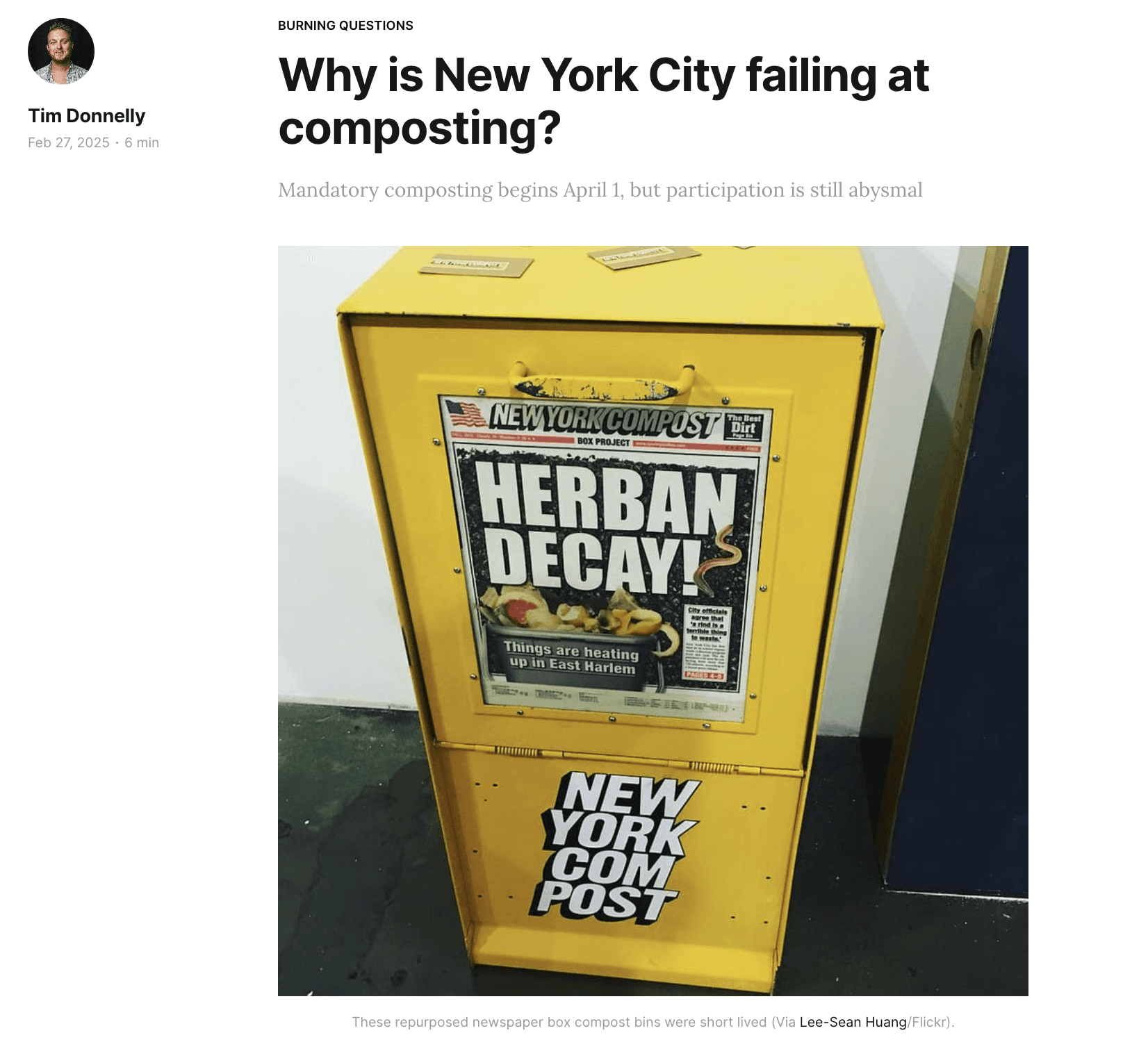
On April 1, 2025 composting became mandatory in NYC.
Infrastructure exists. Participation does not.

On April 1, 2025 composting became mandatory in NYC.

Infrastructure exists.
Participation does not.

The real problem wasn’t logistics, it was motivation, cognitive load, and emotional friction.

Compliance does not equal engagement.

The real problem wasn’t logistics, it was motivation, cognitive load, and emotional friction.

The Solution

What if composting felt rewarding, not required?

Our goal was to make composting feel effortless and joyful while addressing a real urban need. We weren’t designing for regulation. We were designing for engagement.

Our goal was to make composting feel effortless and joyful while addressing a real urban need. We weren’t designing for regulation. We were designing for engagement.

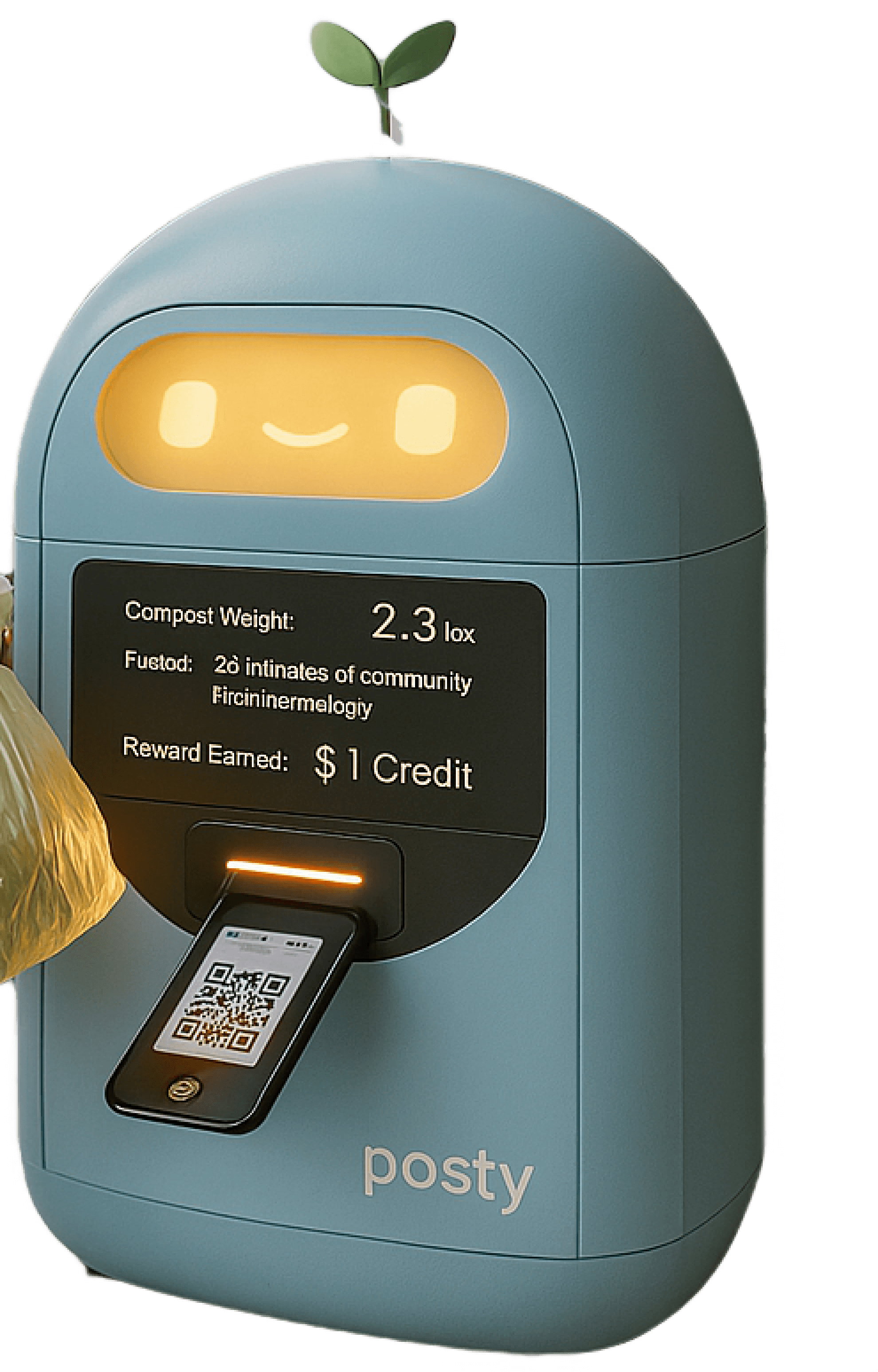
We designed Posty, an AI-enabled compost ecosystem that turns a chore into a behavior shift.

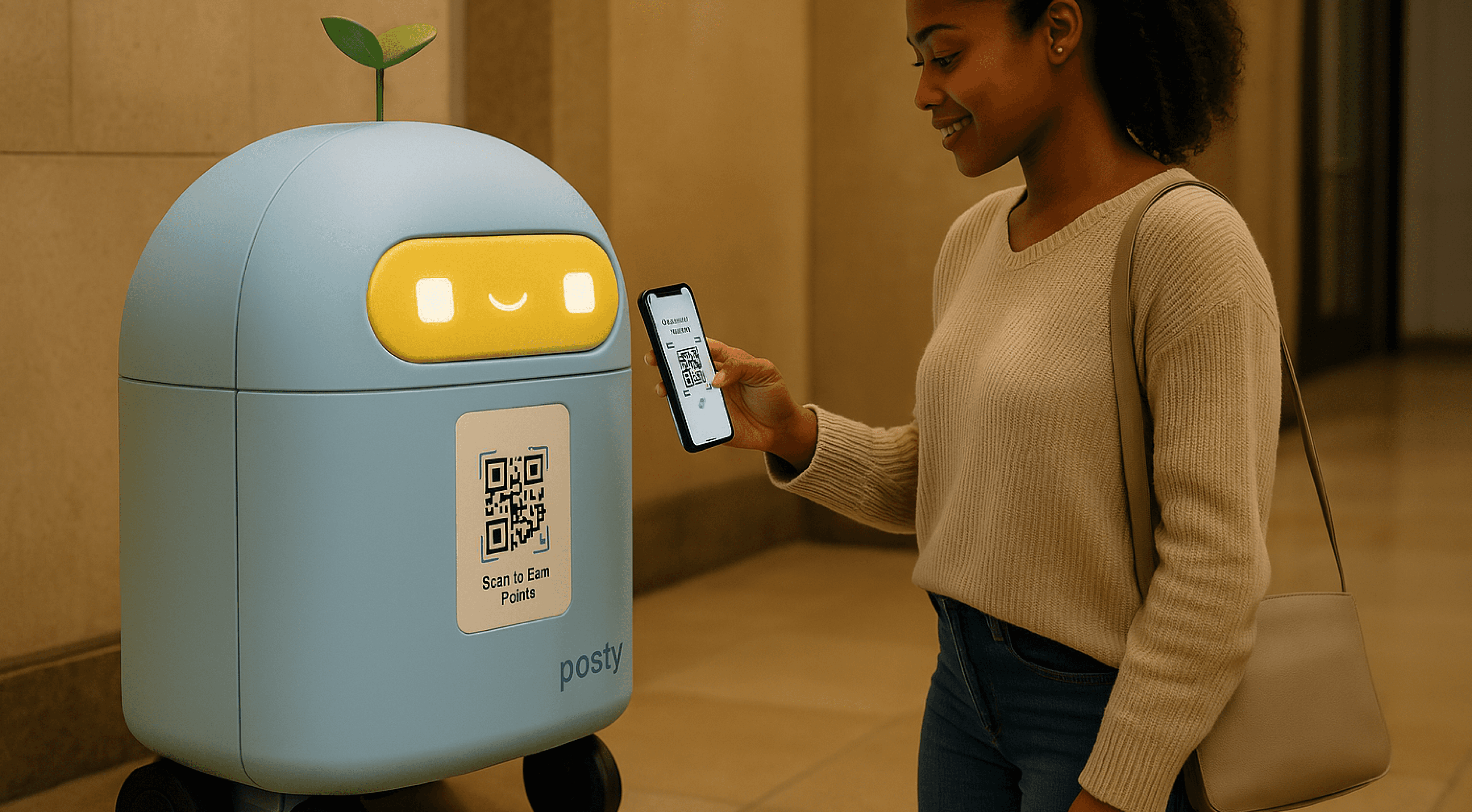
Bucky — The Smart Compost Bin

Bucky — The Smart Bin

Features:

Identifies and weighs food waste

Tracks compost contributions automatically

Syncs data in real time

Posty App — The AI Companion
Features:

Features:

Features:

Visualizes your impact

Rewards positive habits

Turns waste data into meaningful insights

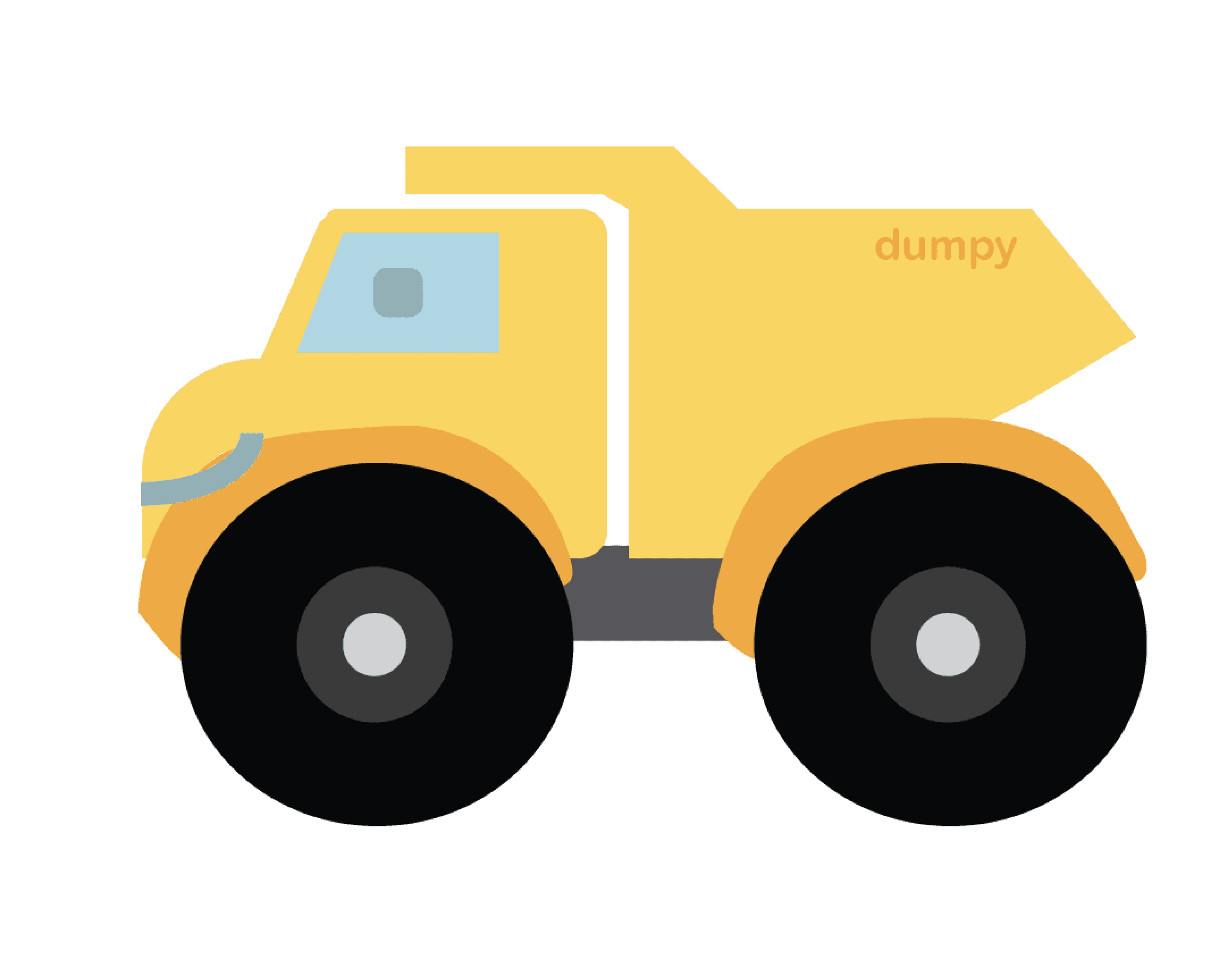
Dumpy — The Logistics Bot

Features:

Features:

Features:

Optimizes pickup routes

Reduces waste transportation inefficiencies

Connects households to local compost hubs

Introducing the Posty App

Core Experience

Bluetooth Sync + AI-Powered Experience

Connect your bucky bucket to the app in just a few taps

Compost & Earn

Every time you compost with Posty, you earn points toward real rewards. It’s effortless, trackable, and designed to make sustainable living feel good.

Compost Calculator & AI Smart Scanner

Snap & Scan: Point your camera at any food or item—our AI tells you instantly if it’s compostable!

Track Your Impact: See how much waste you’re saving from landfills with our compost calculator

Snap & Scan: Point your camera at any food or item—our AI tells you instantly if it’s compostable!


Track Your Impact: See how much waste you’re saving from landfills with our compost calculator

JTBD

Starting with NYC

We needed a solution that meets people where they are and make them actually want to compost

Discover

Understanding the problem & Mapping Behavioral Friction

Composting could redirect this waste back into the local ecosystem, but existing systems feel fragmented and inaccessible.
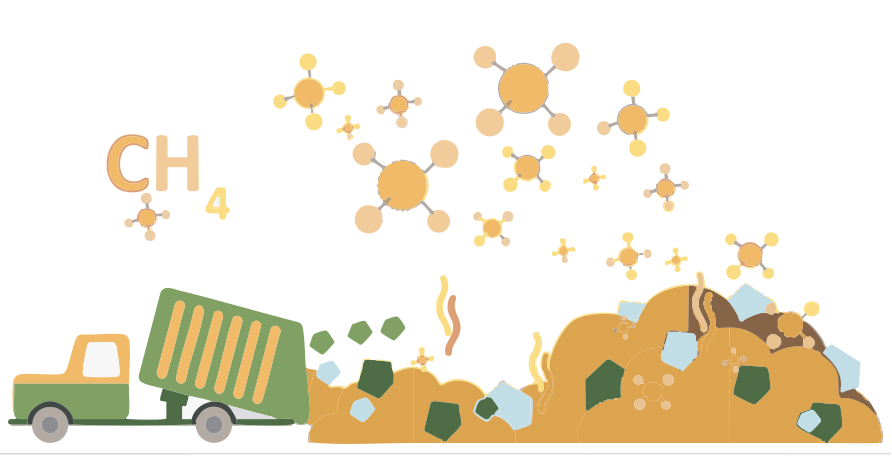
80x more harmful than CO₂

80x more harmful than CO₂

80x more harmful than CO₂

80x more harmful than CO₂

Methane (CH4): a greenhouse gas far more harmful than carbon dioxide

Methane (CH4): a greenhouse gas far more harmful than carbon dioxide

Methane (CH4): a greenhouse gas far more harmful than carbon dioxide

Methane (CH4): a greenhouse gas far more harmful than carbon dioxide

1M tons

1M tons

1M tons

1M tons

of food waste each year in NYC

of food waste each year in NYC

of food waste each year in NYC

of food waste each year in NYC

97%

97%

97%

97%

of that goes to landfill or incineration

of that goes to landfill or incineration

of that goes to landfill or incineration

of that goes to landfill or incineration

To design an effective solution, we mapped not only the technical infrastructure, but also the social, behavioral, and emotional bottlenecks preventing participation.
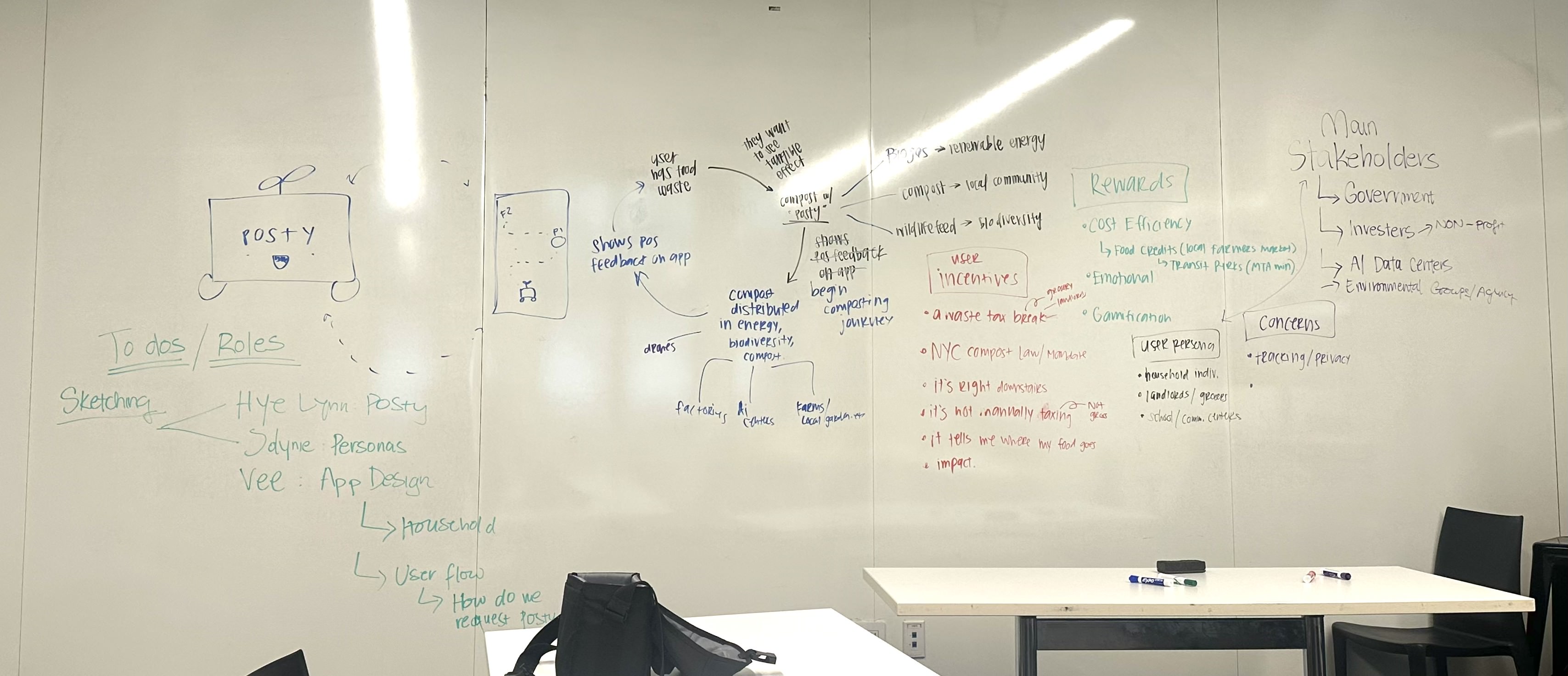
With mentor guidance, we narrowed our focus and defined a clear user narrative.

Define

User Research & Problem Reframing

We visited the Union Square compost drop-off site and spoke with staff at the Lower East Side Ecology Center. While passionate, they were overwhelmed and underfunded. They needed scalable engagement tools and stronger community participation.

We also talked with regular New Yorkers, many of whom told us composting felt gross, pointless, or too much work.


"I don’t really care"

"I don’t really care"

"I don’t really care"

"I don’t really care"

"Too much work"

"Too much work"

"Too much work"

"Too much work"

"Too lazy"

"Too lazy"

"Too lazy"

"Too lazy"

“It’s gross”

“It’s gross”

“It’s gross”

“It’s gross”

These insights reshaped our approach.

Define > Synthesizing Insights

Design Hypothesis

If AI can reduce cognitive load, provide real-time feedback, and make impact visible, composting behavior may shift from obligation to engagement.

Define > Competitive Landscape

Competitors Research

We benchmarked AI-driven food waste solutions including Lomi, Winnow, and EvoBin.

While technically strong, these systems lacked joyful, human-centered engagement.

Define > User Narrative

Building our user narratives

From these insights, we built a user narrative around Frank — a 26-year-old New Yorker who’s never composted, doesn’t really understand how it works, and doesn’t think it matters. Frank’s perspective helped us design with empathy.
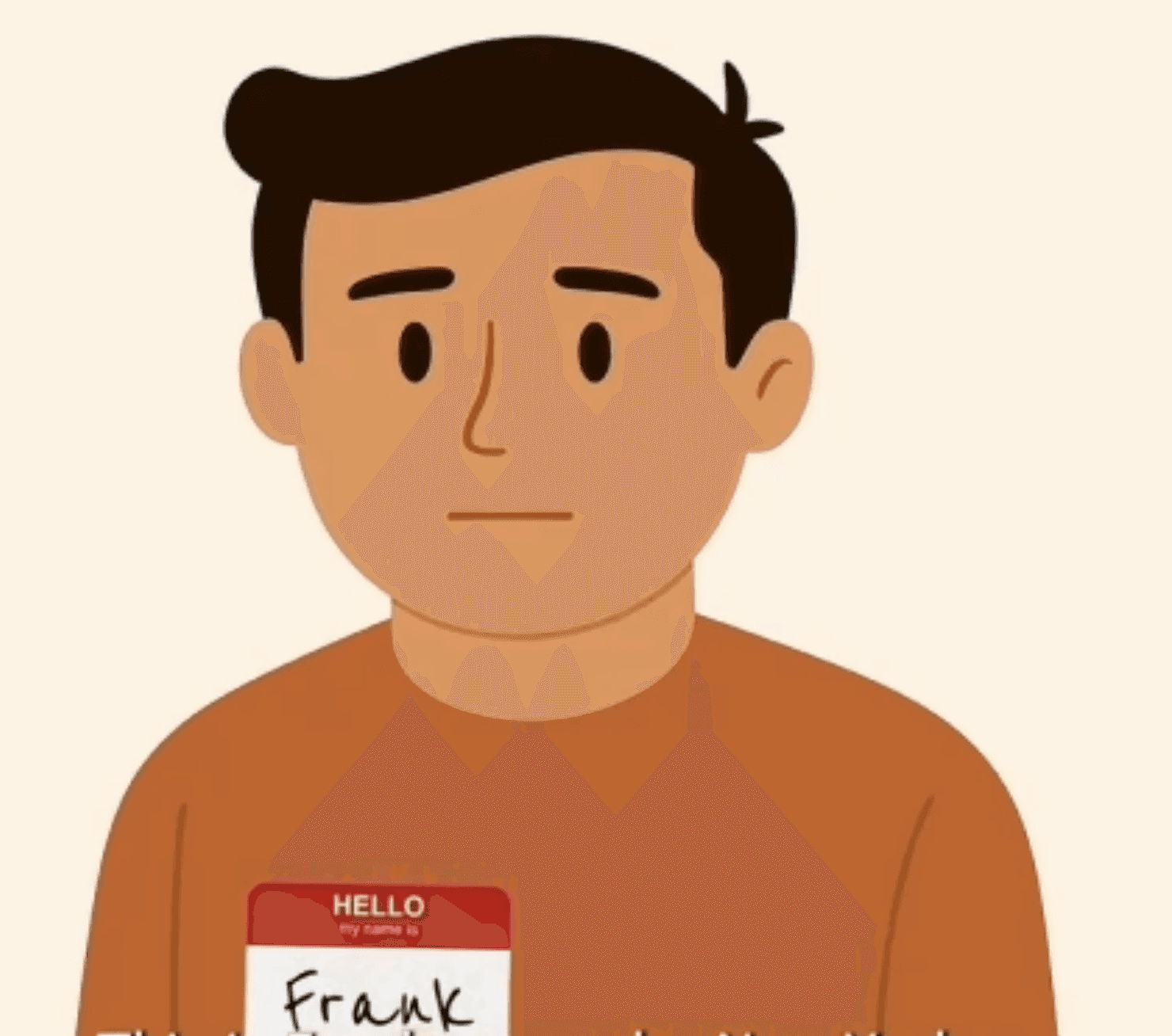
Frank

Frank

Frank

Frank

Work

Work

Work

Work

Master’s Student

Master’s Student

Master’s Student

Master’s Student

Location

Location

Location

Location

New York City

New York City

New York City

New York City

Age

Age

Age

Age

26 | He/hims

26 | He/hims

26 | He/hims

26 | He/hims

“If composting is now mandatory in NYC and comes with a fine for noncompliance, why isn’t there an easy way to do it—and actually benefit from it at the same time?”

“If composting is now mandatory in NYC and comes with a fine for noncompliance, why isn’t there an easy way to do it—and actually benefit from it at the same time?”

“If composting is now mandatory in NYC and comes with a fine for noncompliance, why isn’t there an easy way to do it—and actually benefit from it at the same time?”

“If composting is now mandatory in NYC and comes with a fine for noncompliance, why isn’t there an easy way to do it—and actually benefit from it at the same time?”

Motivations

Motivations

Motivations

Motivations

  • Interaction with Posty

  • NYC Composting Fee

  • Lacks structured ways to Compost

  • Building mandates

  • Interaction with Posty

  • NYC Composting Fee

  • Lacks structured ways to Compost

  • Building mandates

  • Interaction with Posty

  • NYC Composting Fee

  • Lacks structured ways to Compost

  • Building mandates

  • Interaction with Posty

  • NYC Composting Fee

  • Lacks structured ways to Compost

  • Building mandates

Pain Points

Pain Points

Pain Points

Pain Points

  • Doesn’t really know what composting is

  • Doesn’t care about composting

  • Doesn’t think his impact will create change

  • Doesn’t really know what composting is

  • Doesn’t care about composting

  • Doesn’t think his impact will create change

  • Doesn’t really know what composting is

  • Doesn’t care about composting

  • Doesn’t think his impact will create change

  • Doesn’t really know what composting is

  • Doesn’t care about composting

  • Doesn’t think his impact will create change

Needs

Needs

Needs

Needs

  • Something easy to use

  • Gradual exposure

  • Motivation-based system

  • Beneficial points-system

  • Something easy to use

  • Gradual exposure

  • Motivation-based system

  • Beneficial points-system

  • Something easy to use

  • Gradual exposure

  • Motivation-based system

  • Beneficial points-system

  • Something easy to use

  • Gradual exposure

  • Motivation-based system

  • Beneficial points-system

Develop

How Might We?

make a composting system that is so easy, so rewarding, and so fun that people actually want to do it?

Develop > Sketching

Rapid Whiteboard Sketch + Storyboarding the Journey

To explore potential solutions, we then rapid whiteboard sketching to translate story moments into functional touchpoints.


We mapped out potential user flows, AI feedback loops, and incentive systems, focusing on how Posty could connect digital rewards to real-world community outcomes. These early sketches helped us see how the emotional beats from our storyboard could translate into interactive screens.

Next, we visualized how an AI system like Posty could seamlessly fit into everyday life. Our storyboards mapped the emotional shift from:


“I have to compost” to “I want to compost,”


illustrating how small moments of feedback and humor can reshape user perception and motivation.
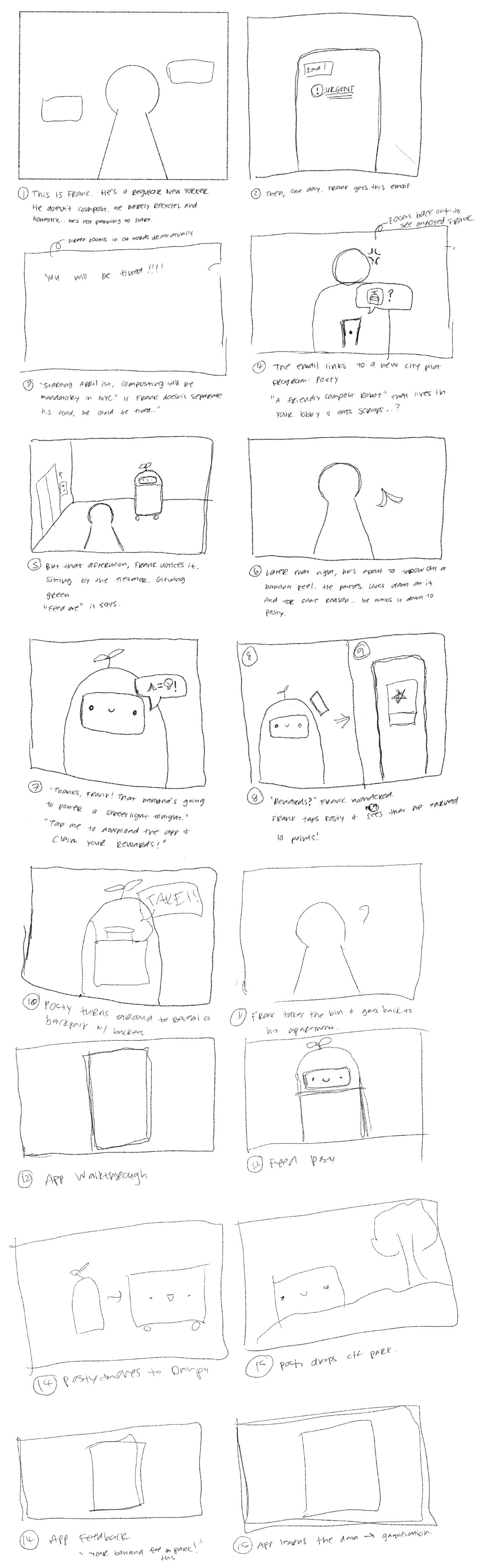
With every step of our system's map, we kept Frank in mind and designed to spark incentive, joy, and emotions.

Deliver

Visual Direction

Lo-Mid Fidelity

Posty uses a warm, nature-inspired palette paired with the modern Mulish typeface to convey transparency, sustainability, and approachability. The colors balance clarity with optimism, while Mulish ensures a clean, friendly user experience.

Posty

Posty

Posty

Mulish Medium 30px

Mulish Medium 30px

Mulish Medium 30px

Mulish Medium 16px

Mulish Medium 16px

Mulish Medium 16px

Mulish Medium 14px

Mulish Medium 14px

Mulish Medium 14px

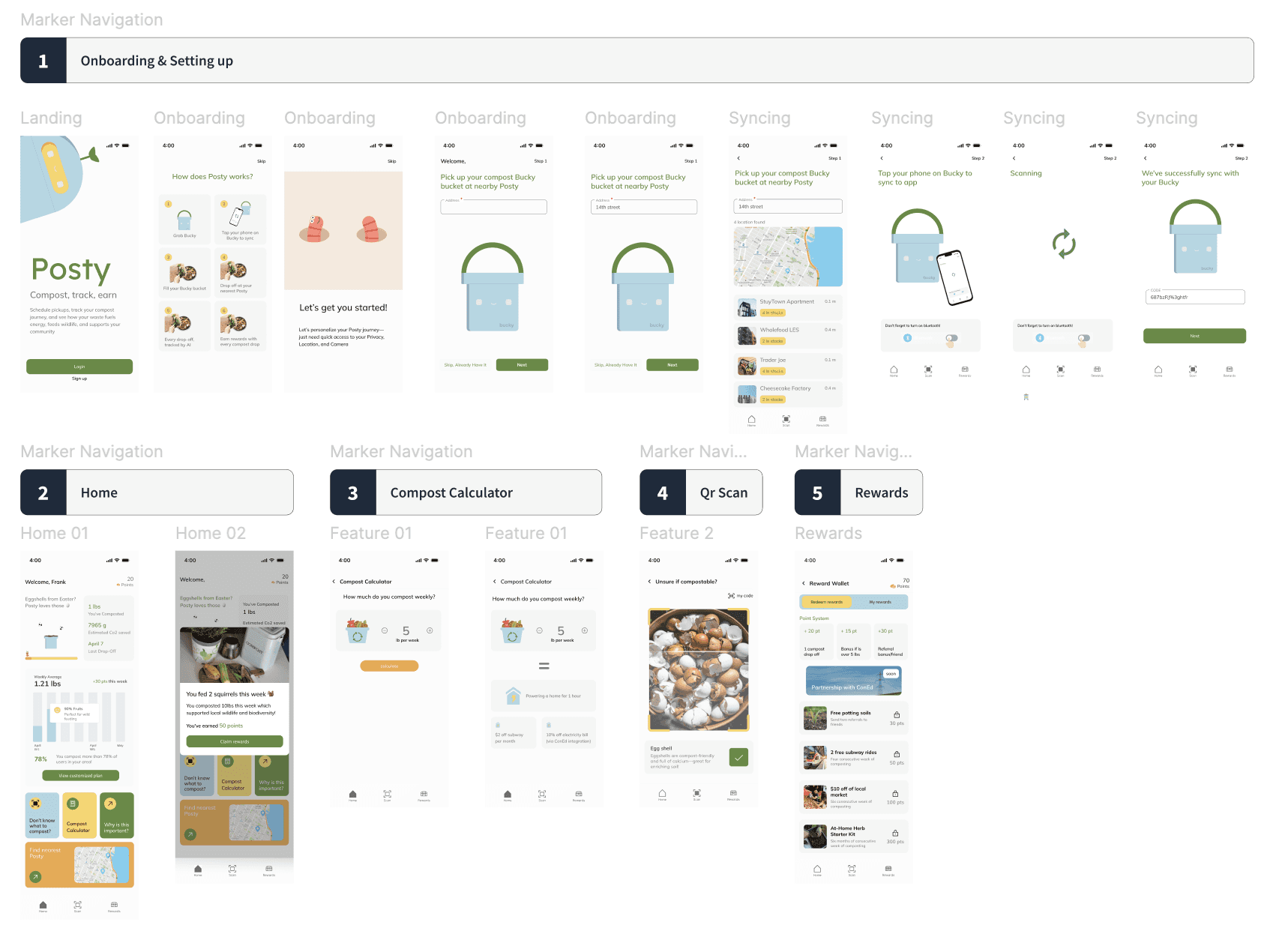
While my teammates worked on Posty Ecosystem - a trio of bots named Posty, Bucky (AI-Powered smart bin), Dumpy (the delivery bot). I led the end-to-end UX flow and app wireframes, translating the ecosystem into a cohesive digital experience.

Deliver

Lo-Mid Fidelity

Lo-Mid Fidelity

While my teammates worked on Posty Ecosystem - a trio of bots named Posty, Bucky (AI-Powered smart bin), Dumpy (the delivery bot). I led the end-to-end UX flow and app wireframes, translating the ecosystem into a cohesive digital experience.

While my teammates worked on Posty Ecosystem - a trio of bots named Posty, Bucky (AI-Powered smart bin), Dumpy (the delivery bot). I led the end-to-end UX flow and app wireframes, translating the ecosystem into a cohesive digital experience.

Deliver

Moodboard

Posty uses a warm, nature-inspired palette paired with the modern Mulish typeface to convey transparency, sustainability, and approachability. The colors balance clarity with optimism, while Mulish ensures a clean, friendly user experience.

Posty

Mulish Medium 30px

Mulish Medium 16px

Mulish Medium 14px

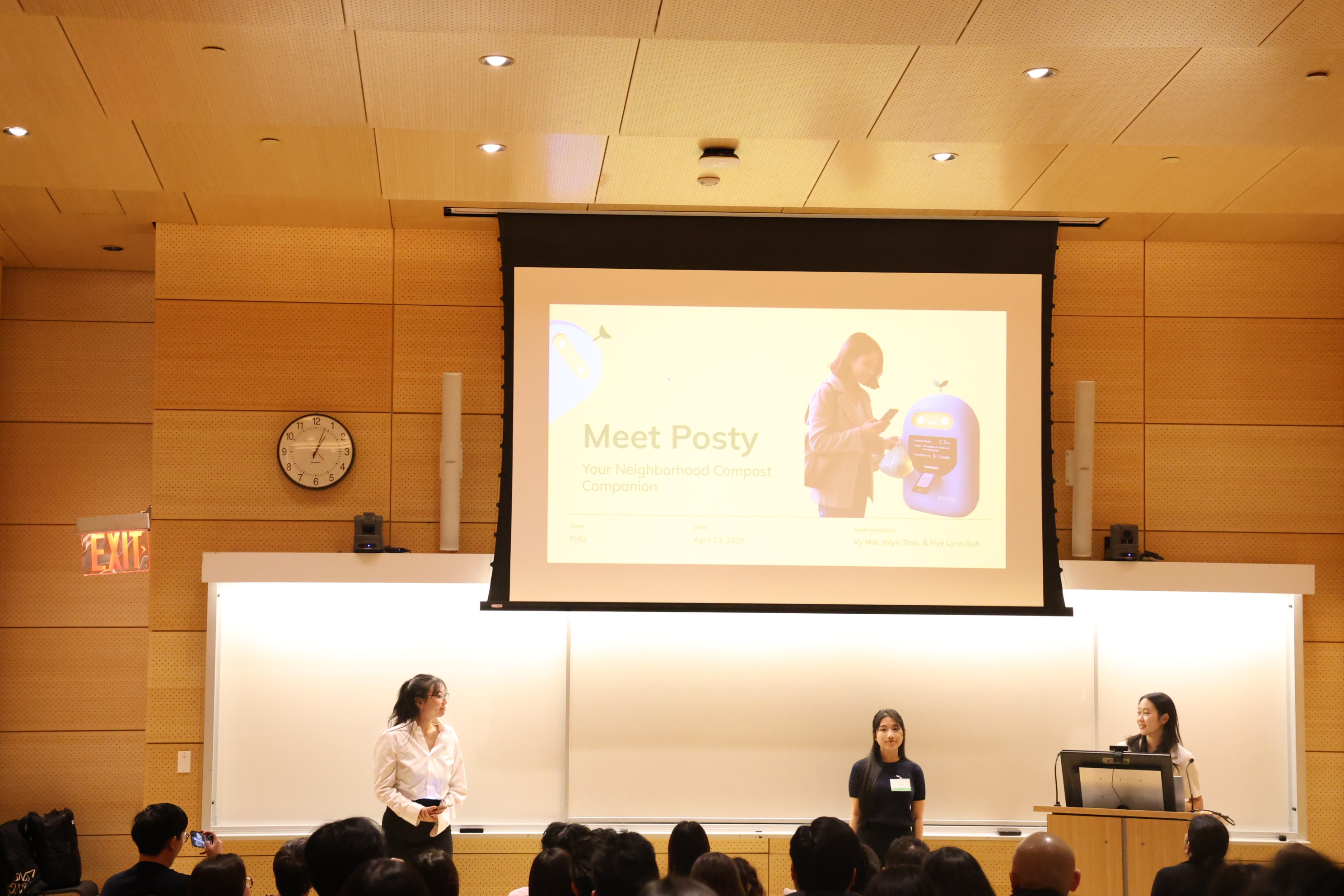
Our AI Prototype

Meet Posty!

Posty transforms composting into a visible, gamified loop of Compost → Track → Earn


Our storyboards mapped the emotional shift from “I have to compost” to “I want to compost,” illustrating how small moments of feedback and humor can reshape user perception and motivation.


Watch our solution video below!

Pitch Video

7 minute Pitch Video

AI Workflow Strategy

Designing with AI as a creative partner
Takeaways:


• LLMs are powerful for hypothesis expansion but slow with heavy context
• Generative video requires staged prompting and iteration
• Not all AI tools are production-ready


Designing with AI requires:

• Prompt precision
• Layered generation strategies
• Critical evaluation of outputs
• Human judgment at every step

List of AI Tools


Ideation (hypothesis expansion)


  • ChatGPT: We used ChatGPT early on for research, brainstorming, and writing our script. It was super helpful in organizing our thinking, though it slowed down a bit once we fed it a lot of context or longer prompts.


  • Gemini: We turned to Gemini when ChatGPT started lagging. It gave us faster, more direct answers in some cases and was useful when we needed quick iterations.


Rapid Prototyping (scenario visualization)


  • Sora: This was easily our favorite tool. We used it to generate hyper-realistic video content and found the best results came from layering generations — starting with text-to-cartoon image, then converting to realistic image, and finally into video. It takes a few steps, but the payoff is worth it. Having a subscription definitely helped unlock its full potential.


  • ElevenLabs: This became our go-to for voiceovers. We used it for Posty’s personality and our final narration. The voices were clear, expressive, and surprisingly funny when we wanted them to be.


  • Suno: We used this for music generation. It was a bit tricky to control, but it produced interesting and unique sounds we wouldn’t have come up with ourselves. It’s more of a creative wildcard than a precision tool.


  • Luma Dream Machine: While we appreciated the realism Sora offered, Luma felt more synthetic and less controllable. That said, it might be more useful for abstract or stylized visuals where realism isn’t the goal.


  • CapCut / Kapwing AI: We tried these for video generation but ultimately didn’t use them. The results felt too generic or overly AI-generated and didn’t match the tone or aesthetic we were going for.


  • Flora Fauna: There’s potential here for designers, but it requires a very specific workflow, usually going from text to image before making a video. It wasn’t intuitive for the kind of rapid experimentation we were doing.


  • Canva AI: We explored it briefly but moved on quickly. It felt limited compared to other tools that gave us more flexibility and control.


  • Gamma: This was helpful early on when we needed to pull together fast presentation drafts for mentor reviews. It lets us focus on ideas and structure before locking in visuals.

Takeaways:


• LLMs are powerful for hypothesis expansion but slow with heavy context
• Generative video requires staged prompting and iteration
• Not all AI tools are production-ready


Designing with AI requires:

• Prompt precision
• Layered generation strategies
• Critical evaluation of outputs
• Human judgment at every step

List of AI Tools


Ideation (hypothesis expansion)


  • ChatGPT: We used ChatGPT early on for research, brainstorming, and writing our script. It was super helpful in organizing our thinking, though it slowed down a bit once we fed it a lot of context or longer prompts.


  • Gemini: We turned to Gemini when ChatGPT started lagging. It gave us faster, more direct answers in some cases and was useful when we needed quick iterations.


Rapid Prototyping (scenario visualization)


  • Sora: This was easily our favorite tool. We used it to generate hyper-realistic video content and found the best results came from layering generations — starting with text-to-cartoon image, then converting to realistic image, and finally into video. It takes a few steps, but the payoff is worth it. Having a subscription definitely helped unlock its full potential.


  • ElevenLabs: This became our go-to for voiceovers. We used it for Posty’s personality and our final narration. The voices were clear, expressive, and surprisingly funny when we wanted them to be.


  • Suno: We used this for music generation. It was a bit tricky to control, but it produced interesting and unique sounds we wouldn’t have come up with ourselves. It’s more of a creative wildcard than a precision tool.


  • Luma Dream Machine: While we appreciated the realism Sora offered, Luma felt more synthetic and less controllable. That said, it might be more useful for abstract or stylized visuals where realism isn’t the goal.


  • CapCut / Kapwing AI: We tried these for video generation but ultimately didn’t use them. The results felt too generic or overly AI-generated and didn’t match the tone or aesthetic we were going for.


  • Flora Fauna: There’s potential here for designers, but it requires a very specific workflow, usually going from text to image before making a video. It wasn’t intuitive for the kind of rapid experimentation we were doing.


  • Canva AI: We explored it briefly but moved on quickly. It felt limited compared to other tools that gave us more flexibility and control.


  • Gamma: This was helpful early on when we needed to pull together fast presentation drafts for mentor reviews. It lets us focus on ideas and structure before locking in visuals.

Takeaways:


• LLMs are powerful for hypothesis expansion but slow with heavy context
• Generative video requires staged prompting and iteration
• Not all AI tools are production-ready


Designing with AI requires:

• Prompt precision
• Layered generation strategies
• Critical evaluation of outputs
• Human judgment at every step


List of AI Tools


Ideation (hypothesis expansion)


  • ChatGPT: We used ChatGPT early on for research, brainstorming, and writing our script. It was super helpful in organizing our thinking, though it slowed down a bit once we fed it a lot of context or longer prompts.


  • Gemini: We turned to Gemini when ChatGPT started lagging. It gave us faster, more direct answers in some cases and was useful when we needed quick iterations.


Rapid Prototyping (scenario visualization)


  • Sora: This was easily our favorite tool. We used it to generate hyper-realistic video content and found the best results came from layering generations — starting with text-to-cartoon image, then converting to realistic image, and finally into video. It takes a few steps, but the payoff is worth it. Having a subscription definitely helped unlock its full potential.


  • ElevenLabs: This became our go-to for voiceovers. We used it for Posty’s personality and our final narration. The voices were clear, expressive, and surprisingly funny when we wanted them to be.


  • Suno: We used this for music generation. It was a bit tricky to control, but it produced interesting and unique sounds we wouldn’t have come up with ourselves. It’s more of a creative wildcard than a precision tool.


  • Luma Dream Machine: While we appreciated the realism Sora offered, Luma felt more synthetic and less controllable. That said, it might be more useful for abstract or stylized visuals where realism isn’t the goal.


  • CapCut / Kapwing AI: We tried these for video generation but ultimately didn’t use them. The results felt too generic or overly AI-generated and didn’t match the tone or aesthetic we were going for.


  • Flora Fauna: There’s potential here for designers, but it requires a very specific workflow, usually going from text to image before making a video. It wasn’t intuitive for the kind of rapid experimentation we were doing.


  • Canva AI: We explored it briefly but moved on quickly. It felt limited compared to other tools that gave us more flexibility and control.


  • Gamma: This was helpful early on when we needed to pull together fast presentation drafts for mentor reviews. It lets us focus on ideas and structure before locking in visuals.

Takeaways:


• LLMs are powerful for hypothesis expansion but slow with heavy context
• Generative video requires staged prompting and iteration
• Not all AI tools are production-ready


Designing with AI requires:

• Prompt precision
• Layered generation strategies
• Critical evaluation of outputs
• Human judgment at every step

List of AI Tools


Ideation (hypothesis expansion)


  • ChatGPT: We used ChatGPT early on for research, brainstorming, and writing our script. It was super helpful in organizing our thinking, though it slowed down a bit once we fed it a lot of context or longer prompts.


  • Gemini: We turned to Gemini when ChatGPT started lagging. It gave us faster, more direct answers in some cases and was useful when we needed quick iterations.


Rapid Prototyping (scenario visualization)


  • Sora: This was easily our favorite tool. We used it to generate hyper-realistic video content and found the best results came from layering generations — starting with text-to-cartoon image, then converting to realistic image, and finally into video. It takes a few steps, but the payoff is worth it. Having a subscription definitely helped unlock its full potential.


  • ElevenLabs: This became our go-to for voiceovers. We used it for Posty’s personality and our final narration. The voices were clear, expressive, and surprisingly funny when we wanted them to be.


  • Suno: We used this for music generation. It was a bit tricky to control, but it produced interesting and unique sounds we wouldn’t have come up with ourselves. It’s more of a creative wildcard than a precision tool.


  • Luma Dream Machine: While we appreciated the realism Sora offered, Luma felt more synthetic and less controllable. That said, it might be more useful for abstract or stylized visuals where realism isn’t the goal.


  • CapCut / Kapwing AI: We tried these for video generation but ultimately didn’t use them. The results felt too generic or overly AI-generated and didn’t match the tone or aesthetic we were going for.


  • Flora Fauna: There’s potential here for designers, but it requires a very specific workflow, usually going from text to image before making a video. It wasn’t intuitive for the kind of rapid experimentation we were doing.


  • Canva AI: We explored it briefly but moved on quickly. It felt limited compared to other tools that gave us more flexibility and control.


  • Gamma: This was helpful early on when we needed to pull together fast presentation drafts for mentor reviews. It lets us focus on ideas and structure before locking in visuals.

Overall Reflection

If we have more time…

I took ownership of translating the concept into a more structured, scalable product direction. My role focused on refining the experience, clarifying the value proposition, and strengthening the visual and interaction system to ensure it felt cohesive and intentional.


I translated a speculative AI ecosystem into a structured, scalable product direction.

I defined the behavioral loops, mapped intelligence touchpoints, and designed the end-to-end user flow that operationalized Posty’s reinforcement system.

Next Steps


The next phase would focus on validation, iteration, and scalability:


  1. User Testing & Feedback Loops
    Conduct usability testing to validate assumptions, uncover friction points, and refine flows.

  2. Feature Prioritization
    Identify which features deliver the highest impact and streamline the MVP accordingly.

  3. Design System Expansion
    Formalize reusable components and interaction patterns to support future growth.

Thanks for stopping by

vyvee.design@gmail.com

Made with sooo many matcha

© 2026 Vee Mai

Thanks for stopping by

vyvee.design@gmail.com

Made with sooo many matcha

© 2026 Vee Mai

Thanks for stopping by

vyvee.design@gmail.com

Made with sooo many matcha

© 2026 Vee Mai